Food waste often begins with a small miss: a bruised item, a bad seal, a wrong label, or stock that sits too long. Robots could reduce some of those losses by checking food, moving it, and sorting it with more consistent timing.
Quick read
- Cameras can spot damage and ripeness during sorting
- Robotic picking can handle delicate items with controlled force
- Better stock data can help staff move older food first
Where robots can help first
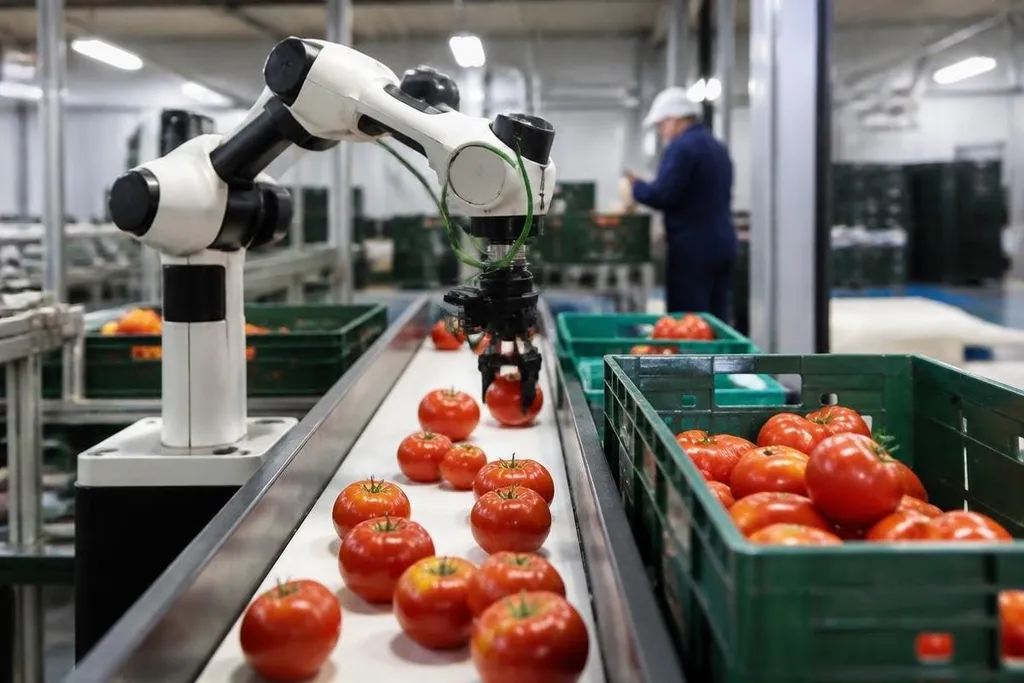
The clearest use is inspection. A camera mounted above a conveyor can check an item’s size, color, shape, or surface condition. Software can then send it toward a different bin, line, or packing station.
That matters because food does not always need to be thrown away when it fails a retail standard.
A misshapen vegetable may still work in prepared meals. A package with a damaged label may need checking, not automatic disposal. A sorting system can separate those cases when the site has a safe process for handling them.
Robots can also check packaging. A camera may spot a missing lid, while a sensor can detect a seal that has not closed correctly. Finding that problem before shipping gives staff a chance to rework the item instead of discovering it after transport or delivery.
Picking without extra damage
Fresh food is difficult to move because tomatoes, berries, bread, and leafy produce react differently to pressure. A robotic gripper needs to control force, speed, and contact area. A hard clamp may damage soft produce even when the item reaches the packing tray.
This is where the hardware matters more than the label on the system. A robot arm with a suction tool may work for smooth packaging but fail on wet or uneven surfaces. A soft gripper may handle delicate produce better, though it can bring its own cleaning and maintenance needs.
The practical goal is a repeatable handoff. The robot should pick an item, place it in the right container, and avoid drops that create bruises or broken packaging. That process needs testing on the actual food, at the actual temperature, with the actual containers.
Timing can matter as much as picking
Food waste also comes from poor stock rotation. A store or warehouse may have the right items but fail to move older stock first. Robots can read labels, scan locations, and send items through a defined route, while inventory software records what moved and when.
That information helps staff make better choices about discounts, packing, and replenishment. It does not fix weak planning on its own. If expiry dates are missing or stock records are wrong, a robot can move the wrong items with great consistency.
Food-waste figures need a clear test: the robot, site, task, and measured change in discarded food should all be named. Robot 24 can help you compare those results with the system’s limits before the next section looks at what these machines still miss.
The limits are easy to miss
A robot cannot decide that food is safe to eat unless the site gives it a reliable way to make that decision. Visual checks can find surface damage, but they may miss bacteria, internal bruising, temperature abuse, or a problem hidden inside sealed packaging.
Food facilities also need cleaning plans, safe robot stops, staff training, and clear rules for rejected items. A machine that improves sorting but creates a harder cleaning task may shift the cost rather than reduce it.
The business case needs the same care. Count the food discarded before installation, the amount rejected by the robot, the labor needed to check exceptions, and the maintenance time.
A pilot should compare those figures over the same type of product and working period.
A practical buying checklist
Use these checks before choosing a food-handling robot:
- Name the waste point: measure whether the loss starts at inspection, picking, packing, storage, or delivery.
- Test real produce: run the robot on the food, packaging, temperatures, and line speed the site actually uses.
- Set a safe reject path: decide where damaged, uncertain, or unfit items go and who checks them.
- Track the hidden work: record cleaning, tool changes, exception handling, and staff time beside robot uptime.
- Check the result: compare discarded weight and product quality before and after the trial.
I’d start with inspection and stock rotation before robotic picking. Those jobs can use cameras and tracking with less contact between the robot and fragile food, while the harder question remains: how much waste does the full process prevent after cleaning, rejects, and maintenance are counted?